Replacement Theology
Is it a valid description for the traditional view on Israel?
2025-11-10 by Steve Forkin
In this article I aim to rebut the claims made in an article on the largest Christian website in Australia: https://dailydeclaration.org.au/2025/10/22/lasting-peace-in-middle-east/
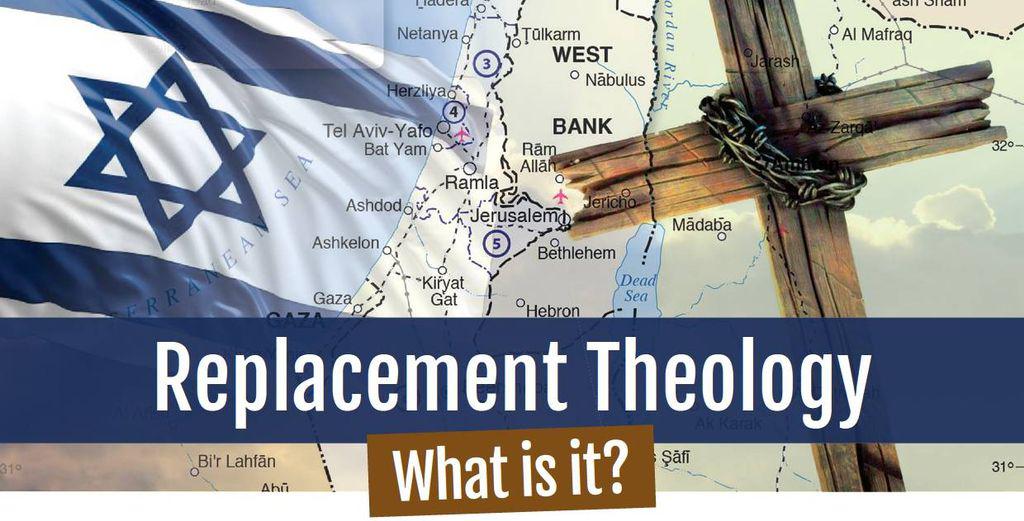
In this article I aim to rebut the claims made in an article on the largest Christian website in Australia:
The Daily Declaration, “Lasting Peace in the Middle East” https://dailydeclaration.org.au/2025/10/22/lasting-peace-in-middle-east/
The claims I am referring to in this article are pretty standard Dispensationalist claims and require some Bible work to see whether the Bible actually supports the claims made.
Replacement Theology: (here is the claim I want to respond to)
Replacement theology, also called supersessionism, is the belief that the Christian Church has replaced Israel in God’s plan, and that the promises made to Israel in the Old Testament now apply only to the Church. Critics of this theology argue that it misrepresents the biblical narrative and undermines God’s faithfulness to His covenant with Israel.
I recently posted a video/version of this on my youtube channel. In that version I began by giving an explanation of how I see the New Testament fulfillment of Old Testament prophecy plays out, using the example of Amos chapter 9 and it’s fulfillment explained by James in the famous Jerusalem council, given to us in Acts 15.
My recommendation would be for you to watch at least the intro to this video before reading on, or catch up on it later. For Christians. it is crucial to read the Old Testament through the lens of the New and not the New through the lens of the Old.
(click on the image to watch the Youtube video..)
Ok, back to the article on the Daily Declaration.
It’s pretty standard rhetoric by those in the Dispensationalist camp to claim the church has replaced Israel, thereby all but labeling it’s adherents as anti-semites since God is no longer interested in the Jewish people – this is at least what it sounds like. As always theological camps are wide and a variety of views exist.
The underlying assumption here is that God’s people = A nation that the church is not this nation and just a parenthesis in God’s plan. Effectively, the Dispensationalist view is that God has two plans for the world, one for the Jews and another for the church.
This is a rather novel view of the whole plan of redemption – from Genesis to Revelation – that did not even exist until John Nelson Darby invented it & Cyrus Scoffield popularised it, in the Scoffield reference Bible. In this article I intend to just respond to Biblical claims and shall leave all the historical issues with this movement aside. (For those who don’t know the Scofield Reference Bible was first published in the early 1900’s) Volumes have been written about these two men, and I do not want to add more fuel to this fire. My aim here is to shed some light on the poor biblical interpretation work displayed in this article and indeed in many of the Dispensationalist publications
Now to the claims in the article & the comments made by several presenters on the Daily Declaration.
CLAIM-1. God’s Covenant with Israel Is Everlasting - Genesis 17
(And does not depend on faithfulness of Israel)
The argument that is presented is that God made an everlasting covenant with Abraham and regards of whether his progeny keeps the covenant or not, they will possess the land forever. The implication here is that this promise goes to the modern day Jews.
If this verse was the only verse in the Old Testament about God’s covenantal dealings with Israel, one could possibly get this idea and then would be immediately confronted with the long periods of exile the second of which lasted roughly a century, the last of which lasted nearly two milenia. How can the Dispensationalist make this “wooden literal” claim that God of necessity will be faithful to Israel as a nation and they will – regardless – possess the land forever, when that has been demonstrably untrue for large parts of history?
As said, if this verse is removed from all the context of the Old Testament, maybe. Thankfully we have a long list of covenantal stipulations called the “Torah” or otherwise the “five books of Moses” to tell us otherwise. A reading of the “blessings and the curses” in Deuteronomy should suffice to put the notion to bed that God made promises to Israel that had no stipulations. Already in the referenced chapter 17 of Genesis, God tells Abraham “As for you, you shall keep my covenant, you and your offspring after you throughout their generations”. The astute reader will also recognise several other statements in chapter 17:
- “Any uncircumcised male who is not circumcised in the flesh of his foreskin shall be cut off from his people; he has broken my covenant.” (verse 14)
Surely being “cut off” would include being “cut off” from the promises of God’s covenant?
And a little later..
- “Then Abraham took Ishmael his son and all those born in his house or bought with his money, every male among the men of Abraham’s house, and he circumcised the flesh of their foreskins that very day, as God had said to him” (verse 23)
I find it rather disingenuous to rip the notion of “everlasting covenant” out of context making it applicable to the Jews and then conveniently leaving out that Abram had more than one son. All of his household was included in this covenant was it not, including his slaves..
Let’s put the Dispensational claims into a formal argument:
-
Premise 1: God has promised to give the land of Israel to Abraham’s progeny forever, regardless of their faithfulness to him
-
Premise 2: Abraham has multiple sons to whom this promise applies
-
Conclusion: Both Isaac and Ishmael have a right to the land of Israel
Oops that didn’t end how we wanted it, did it? This is what happens when you rip verses out of their context. I actually don’t believe the progeny of Ishmael has a right to the land called Israel in the same way Isaac had, but that rests on the context of the remainder of the Old Testament.
You can’t have it both ways. If you insist verses or passages like this one quoted by the Dispensationlist proponents are a literal promise that cannot be broken – regardless of the faithfulness of the human part of the covenant – then you have to accept that the Arabs who claim to be the progeny of Ishmael have equal rights to the land of Israel.
Proof texting lands the Bible student on all sorts of difficult ground, often like quick sand that sucks one deeper and deeper into a whole that one cannot get out of.
If one allows for the context of the Torah – as covenantal stipulations – then one will arrive at a totally different conclusion, and just to use yet another of these “eternal promises”.
In 2 Samuel chapter 7, God promised David – note verses 14-16 – that he would establish his throne forever. Again we have this conundrum. Do we interpret this passage in isolation of the rest of the Old Testament, and then have to reckon with an unfaithful God who quite literally “vomited” his own people out of the land several generations later. It was exactly as God had previously warned the Israelites in Leviticus “lest the land vomit you out when you make it unclean, as it vomited out the nation that was before you.” (Lev 18:28)
Here again we have the choice of “wooden literalising” the promise to King David and end up with an unfaithful God, or we take scripture as a whole and realise that God’s covenantal relations with man always come with conditions. When Israel broke the conditions, God brought his justice to bear on them. The temple was completely destroyed, the land turned to
desert etc.
Let’s move on to the next claim:
CLAIM-2. God Will Not Reject His People - based on Romans 11:1-2
- “I ask, then, has God rejected his people? By no means! For I myself am an Israelite, a descendant of Abraham, a member of the tribe of Benjamin. God has not rejected his people whom he foreknew. Do you not know what the Scripture says of Elijah, how he appeals to God against Israel?”
The argument made by the claim is that the non Dispensationalist say God has rejected Israel – and note here that the definition of the term Israel is smuggled in here – supposedly the modern secular nation of Israel is in view in Romans 11:1-2
Who are those people of whom Paul refers to in Romans 11.1-2?
I think the context suggests strongly that they are members of the household of Israel – given that Paul refers to himself as being of the tribe of Benjamin and Paul also appeals to Elijah.
The question that this passage begs us ask is this: Is Paul broadly referring to all of Israel here or a subset? Two facts in this short passage suggest that Paul is not referring to all Israel, but rather those who are faithful.
How so I hear you ask?
- Point 1: Paul says: “God has not rejected his people whom he foreknew.” Clearly this can’t be just simple foreknowledge of existence - since God knows all human beings like this. That would render this statement meaningless. Could Paul be speaking of
foreknowing all Israelites (as opposed to all humans), in a more personal sense? Maybe, but does that make sense of the next part of the argument where Paul refers to Elijah who made an appeal against Israel? Clearly the English suggests here that Elijah considers Israel as having been rejected given that Elijah appeals against them.
How can we tell is this is so?
-
In 1 Kings 19 we have this moment where Elijah claims “I have been very jealous for the Lord, the God of hosts. For the people of Israel have forsaken your covenant, thrown down your altars, and killed your prophets with the sword, and I, even I only, am left” (2 Kings 19:10)
-
Essentially what Elijah is saying to God is this: Quite literally all of Israel – he is speaking of the Northern Kingdom, later called Samaria here – have turned their backs on God and have become apostate. Elijah is saying he is literally the only one left who is faithful to God. Given that at no other point in the writings of that period, do we see Elijah making such a charge against Israel, it is very likely, this is what Paul had in mind in Romans…
There is more evidence as to why it makes sense to view this as the ground of Paul’s reference in Romans 11:1-2 where Elijah appeals to God against Israel. A little while later God affirms to Elijah that he is not alone, that God has preserved 7000 who are still faithful! “Yet I will leave seven thousand in Israel, all the knees that have not bowed to Baal, and every mouth that has not kissed him.” (2 Kings 19:18)
The context in Romans, is that even though the Jews have largely rejected their own Messiah, Jesus, Paul is nonetheless claiming that God has indeed been faithful, in the same way God has always been faithful to His chosen remnant.
When Paul speaks of foreknowing in Romans 11, we again should look at the context and we don’t even need to look too far to realise that in Romans 9, Paul explicitly tells us what this looks like, “Not all who are of Israel, are Israel..” read the whole chapter carefully and you cannot possibly miss that God’s election is not based on what man does or even his own progeny, but rather based in God’s promise.
Looking just a little further back in Romans 8 we have an amazing passage that spells out really well what Paul is referring to with this word “foreknow”.
“For those whom he foreknew he also predestined to be conformed to the image of his Son, in order that he might be the firstborn among many brothers. And those whom he predestined he also called, and those whom he called he also justified, and those whom he justified he also glorified.” (Romans 8:29-30)
Regardless of what your views on the subject of election and predestination might be, one thing is absolutely certain. God’s people “whom he foreknew” here are not “the nation of Israel” but his people by promise, the saved believers in Christ from both Jew and Gentile!
So when Paul says he will not reject his people in Romans 11 – it’s not speaking of the nation of Israel – it’s speaking of the saved followers of Christ – including Jews - but not including people who are not covenantaly faithful to Jesus, something that cannot in any shape or form be said of the secular nation of Israel!
If you find this analysis of these passages to be “anti-semitic” – because the New Testament does not speak of the modern Nation of Israel in the way that Dispensationalists claim – might I suggest your argument is not with me, but with the authors of the New Testament. Wrestle with the text, by all means, but please realise that simplistic views that tear bible verses out of their context do not do the Bible authors justice.
CLAIM-3. Gentiles Are Grafted Into Israel, Not Replacers
🔹 Romans 11:17-18
“If some of the branches have been broken off, and you, though a wild olive shoot, have been grafted in among the others… do not consider yourself to be superior to those other branches.”
–>The metaphor emphasizes inclusion, not replacement.
Response:
No one ever claims that the church replaced Israel. This whole notion of “replacement theology” is a derogatory term to deflect from the notion that Dispensationalists claim God deals with Israel/The Jews separately to the church. In their view the national promises made to Israel in the Old Testament have a completely separate fulfillment to the founding of the church of the New Testament.
The classic protestant view has always been, there is one people of God, and this passage in Romans 11 - where Paul speaks of Gentiles being grafted in, does not fit the Dispensational teaching of two separate plans for two separate groups, one for the nation of Israel and one for the church.
Let’s break this down into a sylogism.
-
Premise 1: God has two distinct plans for two distinct groups, one for the nation of Israel and one for the church
-
Premise 2: God has grafted the church into his vine as per Romans 17
-
Conclusion: There is one people of God, consisting of Jews and Gentiles.
Do you see the problem here?
The conclusion does not follow from these premises. Either premise one is false, or the conclusion is false. However, if premise 2 is true which it certainly looks to be when one reads Romans 11 carefully, then the conclusion is true. Ergo, premise 1 must be false.
Romans 11 does not appear to support the claims made by the Dispensationalist!
CLAIM 4. God’s Promises to Israel Are Irrevocable
Romans 11:28-29 - “As far as the gospel is concerned, they are enemies for your sake; but as far as election is concerned, they are loved on account of the patriarchs, for God’s gifts and His call are irrevocable.”
The claim is made that even in Israel’s unbelief, Paul asserts that God’s calling and promises to them remain. Replacement theology would imply that God has revoked His promises.
Please read the verse carefully, and ask yourself what is the context of the words election, and God’s call? Clearly and very obviously the context of Paul’s claim is the “the gospel”. Paul’s concern here is to say unequivocally that God will not fail to save those whom he has called. Just like the earlier rebuttal to Elijah who was concerned saying to God, he was the only one out of Israel who was being faithful, and God affirmed, he has 7000 other prophets who have not bowed down before Baal.
The context of Romans 11, earlier is Romans 9, which again states very powerfully that God choses to save whom he choses to save. All the way back to Isaac before Ishmael and Jacob before Esau. Paul goes on to say that Jacob was called before he was even born, before either of them could prove by their works that they in any way deserved God’s promise.
Some will argue that Romans 9 is not about salvation, but merely blessing. This article would get far too long to make a case for why I believe it is about salvation, but even setting that aside, the passage does not help the case of Dispensationalism, as it clearly and unequivocally makes the case that “Not all of Israel are true Israel”.
The Dispensationalist view is consistently aiming to make the promises of God national and both the Old and New Testaments tell us they are covenantal, and promissory, yes primarily to the Jews in the Old Testament, but to Jew and Gentile alike in the New. There is no more division between the two. Dispensationalism is like a return to the Babylonian Talmudic Judaism instead of being true to the consistent and repeated revelation of the New Testament that in Christ that dividing wall has been broken down. Dispensationalists are akin to the pharisees who sought to sow the curtain back together, after it was rendered asunder when Christ called out “it is finished!”.
CLAIM-5. Jesus Affirms the Future for Israel
Matthew 19:28 “Jesus said to them, ‘Truly I tell you, at the renewal of all things… you who have followed me will also sit on twelve thrones, judging the twelve tribes of Israel.’”
No true protestant takes any issue with this argument as it refers to the “New Heavens and the New Earth” to somehow claim this argument is a valid rebuttal of the classic protestant view, is a non-sequitur!
CLAIMS 6 & 7 – Eschatological - claims that rest on “Premillenial Tribulational Rapture theology”
CLAIM-6. The Prophets Foretell Israel’s Future Restoration (this they claim = the modern nation of Israel)
Ezekiel 36:24-28
“For I will take you out of the nations; I will gather you… Then you will live in the land I gave your ancestors…”
They claim: This prophecy speaks of national and spiritual restoration of Israel. If Israel were permanently replaced, these promises would go unfulfilled or need to be reinterpreted allegorically.
Response:
No it does not. There is no 3000 year time gap in this passage. Ezekiel was a prophet to the Jews during the period leading up to the exile in Babylon. Jeremiah another prophet of the same era, specifically claimed the exile would last 70 years, and Daniel another contemporary of Ezekiel’s rightly concluded that the exile would be over soon – during his lifetime.
It’s a historical fact that “the faithful remnant” was returned to Judea under the leadership of Ezra and Nehemiah, during the reign of the Medo Persians. The Christian position has always been in the past two milenia to accept that the promises pre-exile were given to Israel to ensure they would persevere through the exile and these promises were fulfilled post exile.
The real issue lies in the correct interpretation of the very obvious allusions the New Covenant that are mixed in with the promises of restoration to those living in exile.
The Dispensationalist claims the “New Covenant” promises together with the national promises are for the millennial reign post the big tribulation they claim lies in our future. The traditional view is that the New Covenant passages are truly fulfilled in Christ – as they are all quoted to be in the New Testament. See the list below.
The problem remains with some of the poetic / style of the Old Testament promises that sounds like they have not been fulfilled, but this is due to misunderstanding how Hebrews speak when compared to English speaking people do. This same problem persists with many of the New Testament eschatological passages such as the Olivet Discourse where the “language” to us sounds like “end of the universe” style language, whereas to a first century Jew that language speaks of “end of a war, or collapse of an empire”.
I have written a book on the Olivet Discourse: REF – for the person who wants to do a really deep dive into the language.
The End or the Beginning, Unmasking Jesus Predictions in the Olivet Discourse https://www.amazon.com.au/End-Beginning-Unmasking-Predictions-Discourse-ebook/dp/B0DPF23N29.
CLAIM-7 - Zechariah 12:10
“They will look on me, the one they have pierced, and they will mourn for him…”
They claim. this looks forward to a national repentance of Israel, recognising their Messiah—something yet future and incompatible with replacement theology.
Again there is a giant pre-supposition here called: Where is the missing 3000 years that are between the prophet Zechariah and the supposed fulfillment? The plain reading is far more likely to be, that this refers to the Jews who killed Christ,
together with the Romans two millennia ago. They truly did look on him whom they pierced and many did indeed mourn for him. Irrespective of where you land with the interpretation of this passage in Zechariah, it does not make the case for the Dispensational “two distinct peoples of God” notion, nor does this in any way affirm the current secular nation of Israel!
Let’s say this is in the future, and the church has been grafted into the true people of God – the notion of chosen covenantally faithful Israelites. Let’s say further that some time in the future there is a greater revival amongst the Jewish people living all over the globe, who then “mourn him whom they pierced”. There merely proves that God still will have mercy on the Jews. It does not prove the classic position wrong, nor does it affirm the Dispensational position at all.
I shall leave the discussion on the book of Revelation for another time as this article is already getting too long..
CLAIMANT - Final Thoughts
The case against replacement theology is rooted in a consistent, literal interpretation of both Old and New Testament scriptures. It maintains that God’s character is faithful, and His promises to Israel—though delayed in some respects—are not revoked or reassigned. This view affirms both God’s ongoing plan for Israel and the inclusion of the Gentiles through Christ, without negating either.
RESPONSE:
The notion of a consistent literal interpretation is merely a “trope”. The Dispensationalists regularly claim that Ezekiel 37-39 are all about a future nuclear war between Russia and it’s allies and Israel. Yet the honest student of those passages will not find Russia or any modern name in there. There are no nukes, tanks, rockets or any kind of modern warfare devices in those passages. What we have are people and place names that only make sense if these passages refer to a battle that took place now nearly 3000 years ago. Horses, chariots and all the weapons of war in use back then are found in these passages. The reason I raise this is that the Dispensationalist – contrary to his persistent claim of being literal – is actually the one who is not being literal at all.
The proper use of language is really important. If I say to my wife, I am that hungry I could eat a horse, does anyone think she would go out and buy me some horse-meat? Surely not, since language has devices that have specific meaning.
To deny the language devices used by the Hebrew prophets of old, is to destroy their words. The right way to look at the promises in the Old Testament is to read them through the eyes of the New. We must start with Jesus.
“For all the promises of God find their Yes in him. That is why it is through him that we utter our Amen to God for his glory.” 2 Cor 1:20
The reality of the New Testament is that all Old Testament prophecy and promise points in some way shape or form at Christ. Miss that and you miss the most important aspect of the whole Bible:
“And he said to them, “O foolish ones, and slow of heart to believe all that the prophets have spoken! Was it not necessary that the Christ should suffer these things and enter into his glory?” And beginning with Moses and all the Prophets, he interpreted to them in all the Scriptures the things concerning himself.” Luke 22 (Jesus on the road to Emmaus..)
For those who are stuck on the whole idea of national promises and national identity, the words of Peter the apostle should provide some more clarity:
“But you are a chosen race, a royal priesthood, a holy nation, a people for his own possession, that you may proclaim the excellencies of him who called you out of darkness into his marvelous light. Once you were not a people, but now you are God’s people; once you had not received mercy, but now you have received mercy.”
(1 Peter 2:8-10)
For those who would like some further study, these beautiful words of Paul – quite obviously about the New Testament church – are an allusion to the words of the prophet Hosea. Read Hosea chapter 1 and in fact the whole book. The theme is centered on two Hebrew words “Ammi” and “Lo-Ammi” – mercy verses no-mercy and “my people” versus “not my people”.
Clearly the return of the people of Israal after their period of exile was type and shadow of what was to come in the reality of the New Covenant, and the apostle Peter very clearly understood this!
Dispensationalism is akin to a return to the old Judaising heresy of the early church, it’s not only inconsistent with the grand narrative of redemption in the Old and New Testament, it’s in fact an attempt at undoing the finished work of Christ and taking the emphasis away from the work of Christ and placing this emphasis onto the secular nation of Israel.
The people living in Israel today have as much right to live there as Australians have in Australia. The nation is secular, mostly atheist with a very small percentage of truly orthodox Jews and an even smaller percentage of Christians and Arabs, all of whom share in the rights to live there. The creation of this nation was a violent political struggle that has some very dark history that few people are aware of.
The saddest part of this whole issue is that Christians blindly support the military actions of a secular war machine, and all that due to their theological claims that frankly don’t hold any water. This blind support is even cultish in the sense that anyone who dares question it is immediately labelled an anti-semite. Thankfully that stranglehold is not working as well as it used to and Christians are slowly seeing through the deception.