Can Christians Pray Imprecatory Prayers?
Dealing with Difficult Passages in the Psalms
2026-01-05 by Steve Forkin
Many are the imprecatory prayers in the Psalms. What are we as Christians to make of them, can we pray them or should these passages simply be relegated to the Old Testament wars against ungodly nations surrounding Israel. How should we interpret these passages?
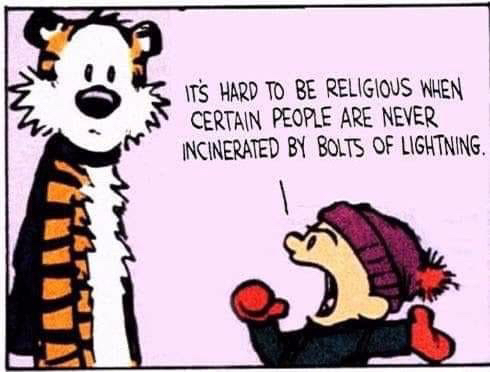
Can a Christian pray imprecatory prayers?
Psalm 139 is one example of many of the Psalms that has language that appears to be very disconcerting for the average Christian today:
“Oh that you would slay the wicked, O God! O men of blood, depart from me! They speak against you with malicious intent; your enemies take your name in vain. Do I not hate those who hate you, O Lord? And do I not loathe those who rise up against you? I hate them with complete hatred; I count them my enemies.” (Ps 139:19-22)
What are we to make of this passage? How can we interpret this passage in harmony the words of Jesus on the Sermon on the Mount?: “Blessed are the peacemakers, for they shall be called sons of God” (Mt 5:9) At first glance the answer might simply be to claim, David lived under the Old Covenant, where righteous war was physically waged against God’s enemies and given that we as Christians now live under the New Covenant, such prayer simply have no relevance to us anymore, apart from learning the history of the Old Covenant.
There is a one sense in which this is true, namely the sense that we as Christians are no longer to physical warfare. Passages like this one in Paul’s second epistle to the Corinthian church, spell this out pretty clearly: “For the weapons of our warfare are not of the flesh but have divine power to destroy strongholds.” (2 Cor 10:4)
The question then remains, do these passages have spiritual relevance to the New Covenant believer? The danger in the camp of those who relegate these imprecatory psalms to the period of the Old Covenant in total, is this: Isn’t that simply an arbitrary claim, and therefore the unbeliever would be justified in equally claiming that the statements in the same Psalm in relation to abortion should equally be relegated to the Old Covenant period?
“For you formed my inward parts; you knitted me together in my mother’s womb. I praise you, for I am fearfully and wonderfully made. Wonderful are your works; my soul knows it very well. My frame was not hidden from you, when I was being made in secret, intricately woven in the depths of the earth. Your eyes saw my unformed substance; in your book were written, every one of them, the days that were formed for me, when as yet there was none of them.” (Ps 139:13-16)
This passage is one of the strongest and most detailed passages in all of scripture, that declares the total humanity of the growing baby in a mothers womb. How anyone could possibly conclude, it is ok to dispense with life in the womb and claim this is health care, just getting rid of clumb of cells, much like surgeons remove other clumps of growth, such as cancer, whether benign or malignant, begs belief, but I digress.
If you relegate some parts of the Psalms to merely being relevant to the Old Covenant and yet simultaneously claim other parts are still relevant today, does the argument from arbitrariness not deserve be levied against you?
What then are we to do?
Here is another Psalm, with similar language, and one that is directly quoted in the New Testament referring to Jesus, that should help us find some proper traction:
- Old Covenant:
“Your throne, O God, is forever and ever. The scepter of your kingdom is a scepter of uprightness; you have loved righteousness and hated wickedness. Therefore God, your God, has anointed you with the oil of gladness beyond your companions;” (Ps 45:6-7)
- New Covenant:
“But of the Son he says, ‘Your throne, O God, is forever and ever, the scepter of uprightness is the scepter of your kingdom. You have loved righteousness and hated wickedness; therefore God, your God, has anointed you with the oil of gladness beyond your companions.’” (Heb 1:8-9)
The thing that should stand out here – relating to the subject we are dealing with – is that God hates wickedness. To hate wickedness is not incompatible with love and righteousness. There is nothing loving about letting a murderer go free. In fact I would dare suggest it is merciful to use the death penalty for certain types of crimes. The kinds of crimes that Biblically deserve the death penalty are also those kinds of crimes from which criminals rarely recover, and once let back out into society – as crime statistics prove – they re-offend. Was it just and merciful to the next victim, to have allowed the criminal to re-offend? True justice is compatible with true mercy and real love.
Imagine for a moment you are a Christian living under the 3rd Reich in Germany, imagine further you have knowledge of what the Nazi’s are doing, the genocide of an entire group of people, and there is precious little you as an individual can do to stop this. What kind of prayers does one pray in this circumstance? Is this not one of these clear moments when such an imprecatory prayer is both valid, righteous and correct? I would dare suggest it is.
The commentary by magisterial reformer John Calvin on verse 22, sheds some more light. “I hate them with perfect hatred” (Ps 139:22)
“Literally it is, I hate them with perfection of hatred. He repeats the same truth as formerly, that such was his esteem for God’s glory that he would have nothing’ in common with those who despised him. He means in general that he gave no countenance to the works of darkness, for whoever connives at sin and encourages it through silence, wickedly betrays God’s cause, who has committed the vindication of righteousness into our hands. David’s example should teach us to rise with a lofty and bold spirit above all regard to the enmity of the wicked, when the question concerns the honor of God, and rather to renounce all earthly friendships than falsely pander with flattery to the favor of those who do everything to draw down upon themselves the divine displeasure. We have the more need to attend to this, because the keen sense we have of what concerns our private interest, honor, and convenience, makes us never hesitate to engage in contest when any one injures ourselves, while we are abundantly timid and cowardly in defending the glory of God. Thus, as each of us studies his own interest and advantage, the only thing which incites us to contention, strife, and war, is a desire to avenge our private wrongs; none is affected when the majesty of God is outraged. On the other hand, it is a proof of our having a fervent zeal for God when we have the magnanimity to declare irreconcilable war with the wicked and them who hate God, rather than court their favor at the expense of alienating the divine layout. We are to observe, however, that the hatred of which the Psalmist speaks is directed to the sins rather than the persons of the wicked. We are, so far as lies in us, to study peace with all men; we are to seek the good of all, and, if possible, they are to be reclaimed by kindness and good offices: only so far as they are enemies to God we must strenuously confront their resentment.” (John Calvin’s Commentaries on the Psalms)
That was quite a mouthful, I know, but what stands out clearly is that as a Christian we should seek the good of all – if possible – but clearly there are times and there is evil that we should, we must strenously confront, both in our prayers and in our speech.
There are indeed several examples of this “hatred of evil” in the New Testament. In the letters to the seven churches in the early chapters of the book of Revelation the Ephesian church is praised for its hatred of the works of the Nicolaitans. “Yet this you have: you hate the works of the Nicolaitans, which I also hate” (Rev 2:6-7)
I would suggest that this correlates to the words Paul wrote in his letter to the same church, admonishing them to: “Take no part in the unfruitful works of darkness, but instead expose them.” (Eph 5:11)
Clearly, all this starts with a particular attitude towards what God clearly hates. If we are to expose the works of darkness in our speech – surely this must start in the pulpit of the church – then what better way to ensure we do this rightly, mercifully and in love, by starting with prayer?
It’s true that, Jesus refused to excercise divine vengeance during his early life. He came not to judge the world, but to save. Jesus also rebuked his disciples who wanted to call down fire from heaven on a city that had rejected Christ’s ministry to them.
However, Christ equally promised judgment on unbelieving cities in the last day, see for example Matthew 11:20-24
Christ’s first comment was not to bring vengeance, that is ultimately postponed until the last judgment. None of these observations either tell us to or forbid us from praying imprecatory prayers much like we read them in many Psalms, today.
Right now, as I write this article, thousands of Nigerian Christians are at the peril of their own lives. Thousands upon thousands have already been murdered by the IS Islamic millitants. Are those Nigerian Christians wrong to ask God to deal with those who seek to murder them, in the same way David sought God to deal with his enemies?
Would the Nigerians be displeased if God responded by sending a mass revival and many of the murderers would turn to Christ? Surely not, and yet surely the response of God sending some form of earthy, yet righteous punishment for the evil being inflicted on them, would be right too.
- This final comment by reformed theologian John Frame gives us a healthy balance:
“I was helped by J. A. Motyer in Elwell, ed., Evangelical Dictionary of Theology, ad loc., who reminds us of the larger biblical pattern: “Vengeance is mine, says the Lord.” The imprecatory Psalms, he points out, are prayers, calling upon God to remedy those injustices which neither we as individuals, nor the state, are competent to remedy. They do not seek personal vengeance; rather they leave vengeance to God, as God has demanded. Imprecatory prayers are like all prayers in that there is always the qualification implicit in the phrases thy will be done or in Jesus’ name. When we ask for things, we should do it with the realization that our ultimate desire is God’s glory. If God will be glorified in giving us our request, then we thank him; if he is more glorified in denying our request, our prayer has not thereby become useless; for all prayer is a recommitment to God’s purpose, his kingdom.” (“Imprecations: Holy Fire”, John Frame)
References:
- John Calvin’s Commentaries on the Psalms - Christian Classics Ethereal Library
https://ccel.org/ccel/calvin/calcom08/calcom08
- Imprecations: Holy Fire, by Prof. John M. Frame
https://www.thirdmill.org/newfiles/joh_frame/TH.Frame.Imprecation.prayer.2.html