Is Daniel 9:27 a Fatal Flaw of Dispensational Futurism?
Sometimes, pulling a pin can pull the entire structure..
2026-04-11 by Steve Forkin
One does not need to be a scholar to recognise there is a fatal flaw in the Dispensational view of Daniel 9. In this article I aim to uncover why an essential piece of the futurist "puzzle" is missing in action and why this verse is so critical for their whole system.

Is the Dispensational Interpretation of Daniel 9:27 a Fatal Flaw in their whole Theological System?
Wait a minute, you might be asking me now, what on earth is Dispensational Theology in the first place? Good question..
Dispensational Theology is a fairly modern theological system – popularised by a minister called John Nelson Darby and perhaps more so by a man called Alexander Scoffield who created the Scoffield Reference Bible at the end of the 19th century.
One of the major differences between traditional Protestant views of the overall schematic of the Old and New Testaments & Dispensationalism is their firm belief in the ongoing idea of God’s coventantal relationship with the Jews / represented by the nation of Israel today. It’s not as if they view the Bible as if Jesus hadn’t come, but they call the whole ministry of Jesus a “parenthesis” in God’s plan that only occurred due to the Jews rejecting their Messiah.
Had they not rejected Christ, everything would have…. let’s not go there. If God is God i.e. if God is what Christians have always believed about him – he is all-powerful, all-knowing etc, then there are no “if this then that” in his plans.
It is like the prophet Daniel said to Nebuchadnezzar:
- “… till you know that the most High rules the kingdom of men and gives it to whom he will.” (Dan 4:25)
Apart from some extremist factions, the majority of Protestants in Christian history have recognised the “blessing” of the Jews, having been God’s chosen means to give us the Old Testament scriptures & the Messiah, in fact most of the New Testament was written by Jews too.. Anyone reading the New Testament will recognise it is a “New Covenant” & covenants have a standard feature of lasting until and when a new one is entered into and agreed on.
Latest by reading the book of Hebrews a Christian should realise the Old Covenant has come to an end. Please, hear me out here, I am not saying that the “moral law” in the Old Testament is now no longer valid, in such things as the Decalogue (= the Ten Commandments), since they are one by one all repeated in some way in the New Testament. What has come to an end – very clearly are all the special covenantal obligations, stipulations and associated blessings & curses. If this is not so, then the final words Jesus said right before passing from life to death “It is finished” (John 19:30) really carry no special meaning at all!
The Christian church – whilst initially consisting of Jews, gradually transitioned to become predominantly Gentile in nature, by the sheer volume of the nations coming to Christ for salvation. Importantly, Gentiles never replaced Jews, but we were rather “grafted into the Olive tree” as the apostle Paul so aptly explains in the letter to the Romans.
Unlike standard Protestants, Dispensationalists hold to the idea that God will continue to deal covenantally with the Jews in a very similar fashion to the Old Testament, when this current church period comes to an end – this comes straight after what most of them call the pre-tribulational rapture. The church is wisked away & God begins to judge the current nation of Israel by inflicting a world wide 7 year tribulation.
The most striking notion of the Dispensational system is that the main features or timeline of the system are not found in any particular Bible passage, whether Old or New Testaments, but rather they quite literally string this system together from single verses out of many books of both Old and New. Humbly said – I believe – they make the most cardinal of all errors in Biblical interpretation, namely to overlook the context of the books themselves, the time they were written in, the initial audiences there were written to & the genres used.
Ok that much for context…
I am currently working through a video by Dispensational scholar & theologian Arnold Fruchtenbaum, on the whole idea of the nation of Israel today in prophecy. In this video he draws on Daniel 9:25-27 as one of his important arguments in favour of the in-gathering of the Jews into the nation of Israel, ready for the rise of a future AntiChrist & the so called 7 year tribulation.
Yes, Daniel 9:25-27 is a big deal, especially in the whole Dispensational Futurism view of things. So let’s dig in. Just before we do, so you know what I am referring to in terms of the Dispensational view, go and watch this video… alternatively, keep reading and watch it later. Also, I am working on a complete rebuttal of all of his claims & that will be in the form of a video. Watch this space…
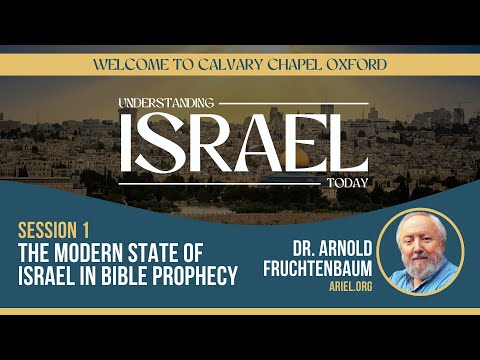
https://www.youtube.com/watch?v=74q9hC30wYs
How many pins can one pull out of a game of Genga before the tower collapses…?
Before we get to the actual passage in Daniel 9, a few words on the book itself. Each book of the Bible was written during a specific time, to a specific audience and in general has a main theme and some sideline themes. An astute student realises this when one reads the Bible as one would any other book – cover to cover. The Bible was never meant to be read by picking individual verses and claiming “this one is for me today”. Such a method can have disastrous consequences. And BTW that is not only true about the Bible..
Daniel lived through the Babylonian captivity, that begain in 586 BC, roughly 2,600 years ago. He was used by God, in a somewhat political sense, to tell the powerful kings that ruled during this period, they are put there by God himself, and to remind God’s people that he is sovereign over their circumstances, their time of captivity would soon end.
People often get bogged in the details of the dreams of beasts and dragons, and especially modern Christians quickly think these dreams relate to our day. But what justification do we have to expect these dreams to be written for a group of people nearly 3 millenia into the distant future of Daniel, what kind of encouragement to the Jews in captivity would that be?
Several of the dreams turn out to be re-capitulations of the succession of empires leading up to the one in charge in the time of Jesus, most scholars agree on the grand picture, with their differences being on the minor details. I have no quible here with the differences in minor details. This article is about the big picture..
In Daniel 2:44, we have what I believe, is the key passage of the entire book. Here we are told that in the time of those kings – an astute reader will have recognised the list of kings started with Babylon (the regime present during the writing of the book) and final beast was the Roman Empire, then comes this amazing statement:
- “And in the days of those kings, the God of heaven will set up a kingdom that shall never be destroyed, nor shall the kingdom be left to another people. It shall break in pieces all these kingdoms and bring them to an end, and it shall stand forever.” (Dan 2:44)
I’d encourage you to read the whole chapter. Daniel continues to give more detail about this kingdom that shall never come to an end. People who have read the New Testament, should now realise Daniel is foreseeing the inauguration of God’s kingdom. Clearly, it is not a military kingdom, even Jesus said to Pilate “My kingdom is not of this world. If my kingdom were of this world, my servants would have been fighting, that I might not be delivered..” (John 18:36)
So far, I think we can safely assert that:
- Daniel speaks of worldly empires that come and go
- The last worldly empire he spoke of was the Roman empire
- This is followed by God setting up his own eternal kingdom
- We have good reason to conclude this is the very kingdom Christ came to inaugurate by his death, burial & resurrection
We now have the stage for Daniel 9, where Daniel is interceding for his people. In this prayer, Daniel recognises the prophecy in Jeremiah about the “end of the desolations of Jerusalem” (Dan 9:2) – namely 70 years, were about to end. Following this we have deeply sincere prayer of repentance of behalf of God’s people… While he was speaking, praying, confessing – please read the whole chapter nine – the angel Gabriel appears in response to this very prayer.
- Sideline note: If Judah was being punished for the most horific of sins, such as offering up their babies to the god of Molech, and Daniel is encouraging this group of people that God is gracious and will end this period of exile within 70 years, consistent with his covenantal promises to Israel in Deuteronomy for example. How then can a Dispensationalist arrive at the conclusion that the Jews after Christ had to way more than 2 millenia for God to be covenantally faithful to them? Doesn’t this fact alone raise some serious questions as to whether the Dispensationalist view is correctly interpreting the Bible? Surely if the same God three millenia ago says he will be faithful to his covenant with the Jews & this results in his bringing them back to the land after a 70 year punishment. What are we to make of God (given the same constraints of Biblical interpretation) who now waits for over two millenia. That is too much cognitive dissonance for me… frankly. Ok, that was just a note on the side to make you ask some questions. Let’s move on.
The context here is that the Babylonian captivity is about to end, and now we have this prophetic statement:
- “Seventy weeks are decreed about your people & your holy city”. (Dan 9:24)
I don’t want to get into the weeds and be lost in minor details. Most biblical scholars recognise that a “week” in Biblical prophecy means 7 years and hence the seventy weeks means 490 years. Let’s say you don’t agree – and this is one of those details, please don’t say that your disagreement is evidence that Daniel really meant 3000 years into the future…. {the Dispensationalist as we shall see does just that in a roundabout way}
We really have only two options here – we either go with the majority view (that is based on several other Biblical prophecies were a week is indicated to be 7 years) or we go with the view that we simply do not know, for reasons of insufficient data. I am ok with either view in principle, BUT:
- Neither one allows you to arrive at the Dispensational view!
Please read verses 24 through to 27 before reading this next part. As I said, my aim in this post is not prove that my view {that almost sounds like I invented it, and that would be arrogant… no this view has existed since the early church. For more evidence see the references} is correct, but merely to demonstrate the achilles heal of the Dispensationalist view, namely the insertion of 2000 extra years as a gap in this passage… between the 69th and the 70th week.
If you are a Dispensationalist, please re-read verses 24-27 again and find the gap, find the missing 2 millenia in there. For the life of me, I cannot find it… Can you?
No disrespect meant here, since I used to naively hold to the Dispensationalist view, until I started to look again and began to recognise one inconsistency after another. Eventually, I realised the whole system is built on a house of cards!
Let me summarise the passage (without the minor details that people quibble over):
- 70 weeks are determined for the house of Israel & the temple.
- These 70 weeks are for the purpose of bringing an end to sin, atoning for iniquity & to inaugurate everlasting righteousness.
{The astute student will recognise the similar words from Daniel 2:44 – are we meant to believe the kingdom spoken of in Daniel 2 is the same kingdom that will be inaugurated by the ending of sin & atoning for iniquity? I think the context strongly suggests this is so.}
- The starting point of the 70 weeks is the official decree from the current empire, for the Jews to go and rebuild the temple.
{Read the books of Nehemiah and Ezra for the context here – they are the leaders of this period, together with several of the minor prophets, such as Haggai & Malachi}
-
Starting with the decree to rebuild the temple 7 weeks ( 49 years ) shall pass - again this is likely the period of Ezra & Nehemiah culminating in the high priest Joshua as mentioned in the minor prophets.
-
Following this we have a period of 62 weeks (62 * 7 years) - where the temple has been rebuilt but with times of trouble and tumult. (A study of the so-called “inter testamental period”, basically the time from the end of the writing of the Old Testament until the coming of Christ, i.e. these 62 weeks were a time of great political upheaval and battles for the Jews to retain their faith.)
-
The culmination of these 7 + 62 weeks = 483 years brings us right up to the time of Christ. Most scholars agree this is so – even if they argue over the exact date of the initial decree, i.e. which Persian King was the right one to start with. Incidentally and importantly, most Dispensationalists also agree so far.
So far so good… What then are we do make of the final 7 years.
-
HERE IS THE ACHILLES HEEL…
-
In verse 24 – as most agree – Daniel is telling us about the coming of Christ, the only figure in human history who atoned for sin, the sins of all of humanity, and inaugurated the only everlasting kingdom ever to exist, namely his own kingdom!
-
In verse 26 we have this “after 62 weeks an anointed one shall be cut off” followed by “the people of the prince who is to come shall destroy the city and the sanctuary… Desolations are decreed”
-
Please tell me you realise that the “anointed one” is Jesus who was indeed “cut off”, cursed by hanging on a tree, taking the curse of sin – our sin – upon himself, the only figure in human history to do this very thing. That much simply jumps out at you, especially as a New Testament Christian, knowing all about Jesus.
-
An astute, student of history realises that within “one single generation” after the death burial and resurrection of Christ, there indeed was such a “prince”, namely general Titus of the Roman Empire who invaded Judea to quell uprisings, sacked Jerusalem & even entered the “holies of holies” in the temple. This whole war culminated in the sacking of Jerusalem, the total destruction of the temple, and the mass slaughter of Jews, unknown in history & never to be repeated again. The Romans crucified Jews at a rate of 2000 a day leading to the total slaughter exceeding a million Jews from that area alone, and the final captivity of the remaining 100,000. (all of this is well documented by Jewish/Roman historian Josephus in his “Antiquities of the Jews” & “Wars of the Jews”).
-
{Please see my book “The End or the Beginning” (see references below) for a detailed walk through the famous Olivet Discourse in the three synoptic gospels, there I go into all the historical details of what actually happened in AD70}
-
The final verse 27, is the problem verse, where the Dispensationalist quite literally inserts 2000 years claiming, it has not happened yet, so we must have a future Antichrist to fulfill this part… Yes, you read that right. That is the “gap” that is the lynch-pin of evidence for the future world wide 7 year tribulation. Well, to be fair, the combination of the “futurist” reading of the Olivet Discourse. Let’s for argument sake assume that the Olivet Discourse is about the future. Does that give us the right to insert into this verse here, what plainly isn’t there? I think that would be really sloppy interpretational work. Doing this allows for a boatload of further mistakes down the track.
-
Phew… that was hard work.
-
Let’s read verse 27 in it’s entirety: “And he shall make a strong covenant with many for one week, and for half of the week, he shall put an end to sacrifice and offering, and on the wing of abominations shall come one who makes desolate, until the decreed end is poured out on the desolator.”
-
First and most important question? Seeing we haven’t found the gap between the 69th and the 70th week earlier, did you find it in this verse? Yeah, I didn’t either… this is perhaps one of the most egregious errors of Biblical interpretation – when it comes to Bible prophecy, that has serious political & cultural implications for Christian worldviews. The error here is called “eisegesis” - it’s theological term meaning “to read into the text what plainly isn’t there in the first place”.
-
The final problem we then have, is this: Who is the “he” in this verse. Some say the context of what “he” does, leads one to believe it is the “anointed one” – Jesus – since Jesus’s ministry lasted for 3.5 years & he did put an end to the sacrificial system in his death and resurrection, but the Dispensationalist says that ignores a cardinal rule of interpretation – and here I actually tend agree with them – namely that the immediate & closest noun to “he” is that prince that is to come & destroy the city.
-
So what did Titus do? Did he actually do what verse 27 tells us? Again the whole war in Judea did actually last for approx 7 years and the actual siege of Jerusalem last for nearly 3.5 years, especially when one takes into consideration that during this period there was so much upheaval in Rome that you had a short succession of several emperors, some only lasting mere months. It was a period of terrible upheaval all over the Roman empire, of “wars and rumours of wars” as Jesus so aptly tells us in his Olivet discourse (Mt 24, Lk, 21 & Mk 13)
-
Whilst Jesus inaugurated the real kingdom of God, by dying for our sins & rising again – putting an end to the sacrificial system. Remember, the curtain in front of the “holy of holies” tore, top to bottom, in the very moment Christ died – yet in stubborn rebellion the Jews sewed it back up and continued for another generation with the sacrificial system.
-
Here then this actually finally and fully came to an end with the sacking of the city & the destruction of the temple in AD 70. When Jesus spoke his final words on the cross, “it is finished” (John 19:30), it truly was, but God in his mercy then gives his own people yet another generation – a period of 40 years of mercy – where the gospel is first faithfully preached to the Jews, many of whom are swept into the Kingdom, believing in Christ for the forgiveness of their sins. Then at the end of this period of grace, much like “extra time in the soccer finals, due to a missing winner”, God sends his “prince” – not to be mistaken in the way that God endorses the evil of the Roman empire – the Roman General Titus to sack Jerusalem, marking the true and final end of the Old Testament religious system.
-
To fail to recognise that the death, burial & resurrection of Jesus coupled with the awful events of AD70, mark the END of the Old Covenant with all its accompanying stipulations, blessings and curses, i.e. the complete end of the what we would associate with the Old Covenant, is to interpret the Bible as if Jesus had never come, as if we are still awaiting the Messiah. In some sense – unwittingly so – many Christians today think like Talmudic Jews.
-
From this time forward the emphasis on the gospel going out changes from Jew to Gentile – not and never in the sense that Jews have been “replaced” this is a red-herring argument that carries no weight – but in fulfillment of the grand statements of blessing by the Old Testament prophets that the gospel will go out to the nations, to all of them, and like leaven, the whole lump will eventually be leavened, to quote yet another picture by the apostle Paul.
-
So, whichever person ends up being the “he” in verse 27, there is no 2 or 3000 year gap & a future political Antichrist in this verse, that has to be read into it to arrive at that conclusion. I would suggest to you that people only arrive at that conclusion, because their system of interpreting the Bible at large demands this conclusion from them. Entire Seminaries have been built on this and several other similar “eisegetical” assumptions and once sufficient sums of money have been put behind any theological system, it is hard to switch tracks and follow the conclusions of the text!
I shall leave you to ponder this key verse in the book of Daniel again:
“And in the days of those kings, the God of heaven will set up a kingdom that shall never be destroyed, nor shall the kingdom be left to another people. It shall break in pieces all these kingdoms and bring them to an end, and it shall stand forever.” (Dan 2:44)
-
References:
-
“Wars of the Jews - Josephus, https://www.ccel.org/ccel/josephus/works”
-
“Antiquities of the Jews - Josephus, https://www.ccel.org/ccel/josephus/works”
-
“In the Days of these Kings - The Book of Daniel in Preterist Perspective, by Jay Rogers”
-
“The End or the Beginning - Unmasking Jesus’ Endtime Predictions in the Olivet Discourse, by Steve Forkin”