What is the Power of God?
2026-08-28 by Steve Forkin
Charismatics want to persuade you that they truly have the power of God and the evidence is seen in their theatrical displays of power so called.

What is the Power of God, is it the Charismatic Theatrics?
There is a proliferation of content on the internet, pushing people associated with the new rise of what is commonly known as the “signs and wonders movement”, or the “revival now”, or perhaps the more sinister “New Apostolic Reformation”.
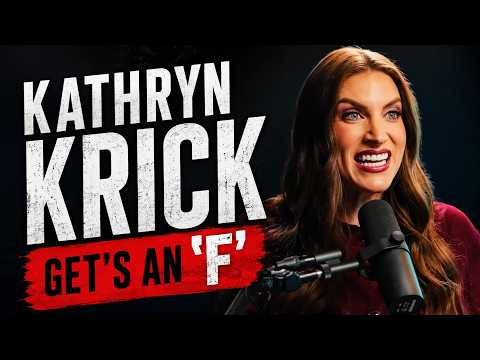
This morning guys (including me) at No Apologies did a take down video of a self-proclaimed apostle called Kathryn Krick
This episode is also available on Youtube here:
That aside, what really is meant with the term Charismatics use so often “power”. Their claim is that ordinary Evangelical churches, such as Lutherans, Presbyterians, Anglicans or Baptists don’t have or experience the power of God – certainly not in the same way that Charismatics, such as the lady we spoke on, in the video this morning.
Their basic premise is that when the New Testament speaks of “power” it means, signs, wonders, miracles including things such as falling down on the floor when the preacher touches, blows on or waves his coat over you or indeed the whole crowd.
Close scrutiny of the actual miracles that happen in Charismatic churches and events, are that they are predominantly of a psychosomatic nature. I deliberately used the word predeminantly, since am sure God at times sovereignly acts to heal human disease. This - btw - also happens in the ordinary churches that Charismatics so readily accuse of lacking in the power.
Several long term studies have been done – with documentary evidence – that the majority of really sick people are regularly filtered from ever getting on stage to be prayed for. The archetypical healing evangelists like Benny Hinn have teams of professional “filterers” who ensure the right people arrive on stage, those who can be given the right “power” treatment followed by a very likely adrenalin rush and subsequent testimonial to the power of God to heal.
Sadly the follow up results of these events is disastrous. I don’t even want to go into the details, they are readily available to the person who seeks for clarification. The only objectively true thing that always transpires, is the emptying of pockets of the unsuspecting attendees.
That leaves us with the one thing that is real and does happen at all of these events. The falling down in power and when “deliverance” is involved the rolling around on the floor, both usually followed by testimonies of demons having left and deliverance achieved.
Youtube – one would have thought - provides the means for these charlatans to be exposed. By now lots of videos have been made showing that the same people (wearing different clothes) keep appearing for deliverance at services such as Kathryn Krick, same skin colour, same face, same tatoos.
Are they paid hucksters / employees or are they just overzealous followers, keen for Krick to be a raving success?
God only knows.
The theatrics appears to be getting worse, but none of these has any biblical precedent.
A simple comparison with the various descriptions of Jesus, casting out demons shows some cardinal differences:
- There are no sowing and reaping, paying tithes and ever bigger offerings to coerce Jesus
- Jesus never has to cast the same demon out weak after weak, again and again
- There is no theatrics of fanfare with the way Jesus handles the demons
- Jesus usually encourages the crowd not to tell anyone
- Jesus never aimed at celebrity status
- Jesus certainly never encouraged any payment, given that Jesus took whip to the money changers in the temple, it’s not hard to see how Jesus might have responded to the horrendous ideas suggested by the likes of Krick.
So what are we to make of their displays of power – the falling down and rolling around on the floor. Yes, this is all that truly differs the Charismatic “miracles and wonders” from the run of the mill Evangelicals today. The success rate in healing the sick, is no different. Healings are simply very rare, anyone with a shred of honesty would have to admit this.
Let’s first take a brief look at the term “power” in the New Testament. A brief search in my Bible software shows that the term is used over 100 times.
Yes sometimes Jesus does indeed use the term “power” in relation to healing. This however is not suddenly a passage that can be used to demonstrate the truthiness of the Charismatic power antics.
- “And Jesus, perceiving in himself that power had gone out from him, immediately turned about in the crowd and said, “Who touched my garments?” (Mk 5:30)
It seems rather obvious that the healing miracle had something to do with the power of God. What you never see is Jesus touching, blowing on or waving his clothes over crowds and they fall down or writhe on the floor – whether singular or as a group. This is a sensation that is entirely foreign to the New Testament.
Usually when confronted with this somewhat unsurmountable hurdle, those pushing these power antics refer to two passages. One in the garden of Gethsemane when the soldiers arrested Jesus, they fell backwards. and two the dedication of the temple under Solomon, the priests and levites – we are told – could not stand to minister due to the presence of God. We are not told that they fell down or writhed, and neither did Solomon touch, blow or wave his clothes. Jesus didn’t do any of these things either. The passages quoted simply do not help make the Charismatic case. The Bible has nothing to say in support of this strange behaviour.
Considering the extraordinary similarity to what happens at regular Hypnotism events, it seems to me to be a mix of human emotion, a desire to please the Charismatic leader, and downright hynpnotism.
Considering the ball is in the court of the Charismatic, since he or she cannot provide any Biblical evidence for this behaviour, I shall not make any further comment.
- “And he will go before him in the spirit and power of Elijah, to turn the hearts of the fathers to the children, and the disobedient to the wisdom of the just, to make ready for the Lord a people prepared” (Lk 1:17)
Isn’t it strange that Charismatics often refer to the displays of God’s power under the ministry of Elijah, as if to claim, that proves their own displays of power, that Luke writing under the inspiration of the Holy Spirit, refers to the ministry of John the Baptist as “in the power of Elijah.”
I would suggest to you that John’s primary focus was call the Judeans of his day to repentance. The fact that he was calling for their baptism, should give us pause. Why did people in those days get baptised, who was baptism meant for?
Baptism being a particular Christian practice, and the fact that Paul encourages recent converts who have been baptised with the baptism of John to be re-baptised, what is the significance of John’s baptism?
For this we need to look between the pages of the end of the Old Testament and the New Testament. The extra biblical writings, whilst not being divinely inspired, have a lot of historical value. They tells us that it was a rite of passage for Gentiles, desiring to become Jewish or at least accepted by the Jews to be baptised.
John the baptist – under the inspiration of the Holy Spirit – realised that the Jews had become so far apart from their true Mosaic origins, they needed to bow down, and be treated just like their gentile fellow humans, in repentance, awaiting their true Messiah, Jesus.
This is what is meant by “in the power of Elijah” – unless of course you want to adopt an entirely unbiblical and unhistorical position that John the baptist was “blowing on and waving his coat made of animal skins” at the Jews, and they fell down and writhed in masses. Anyone with a basic understanding of the gospels knows.
So what does Paul think about the power of God?
- “For I am not ashamed of the gospel, for it is the power of God for salvation to everyone who believes, to the Jew first and also to the Greek” (Rom 1:16)
Isn’t ironic that at any given Sunday in a typical Presbyterian church, the scriptures are exponded and a message centered on the gospel is preached, calling attendees to repent and turn to Christ, whilst in any typical Charismatic or Pentecostal church, sermons are so frequently centered on messages of what you are to do to be a better follower of Jesus, or how you can experience your best life now.
- “His divine power has granted to us all things that pertain to life and godliness, through the knowledge of him who called us to his own glory and excellence,” (2 Pet 1:3)
Sadly the Charismatics have a presupposition on what they think “power” means rather than letting the context in each passage determine the meaning of the term. Here quite obviously the term “power” has again nothing to do with falling down and writhing.
- “We know that we are from God, and the whole world lies in the power of the evil one.” (1 John 5:19)
Again, the power here has nothing to do with subjective emotions or theatrical experiences. The quite obvious meaning here is “authority”. Satan is the ruler of this world, as seen in John 12:31 - “Now is the judgment of this world; now will the ruler of this world be cast out.”
What can we say in summary on the term power?
Each of the over 100 passages using the term must be properly interpreted, letting the context in each passage determmine the correct meaning of the term.
A careful analysis of each and every one of it’s uses shows a manifold array of uses. One thing we can however be certain of. There is not a single moment in the New Testament where the power of God, is used or shown in a way that can be drawn upon to support the claims of the Charismatics.
I want to say categorically here, that I am referring to a particular branch of the Charismatic movement. There are indeed many Charismatics – that I would stil disagree on relating to the operation of the gifts of the Holy Spirit today, that would still vehemently reject the antics and doctrinal errors displayed in ministries like that of Kathryn Krick.
For the record, here is a position paper, originally posted on the internet in the late 1970’s in relation to the New Apostolic Reformation, on the subject of modern apostles and prophets. Even the classic traditional Pentecostal denominations had their very serious concerns.
References:
-